Roughly 25% of American households rely on septic tanks for treating and disposing of wastewater. Proper maintenance and care of septic tanks is essential to ensure their functionality and prevent potential issues such as backups, odors, and environmental contamination.
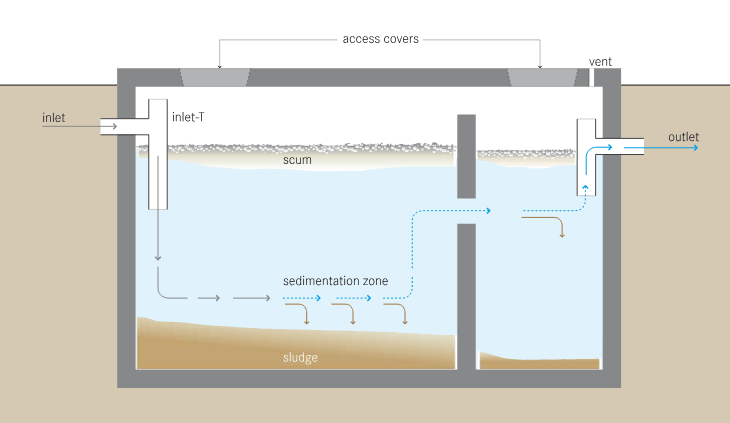
A septic tank is an underground system that collects and treats wastewater from a household. The tank is usually made of concrete, fiberglass, or plastic and is divided into two compartments. The first compartment receives the wastewater from the household, allowing solids to settle at the bottom while allowing liquids to rise to the top. Liquid passes through the tank, causing heavy particles to settle at the bottom and scum (mainly oil and grease) to rise to the top. Over time, the solids that accumulate at the bottom partially break down by bacteria without oxygen. However, accumulation happens faster than decomposition, so it’s necessary to regularly remove the built-up sludge and scum. The effluent from the septic tank can be dispersed through a soak pit or leach field, or transferred for further treatment using a solids-free sewer system. A properly designed and well-maintained septic tank typically removes around 50% of solids, 30-40% of BOD (biochemical oxygen demand), and reduces E.coli levels by one logarithmic unit; although efficiency varies based on operational practices, maintenance efforts, and local climate conditions.
WHAT KINDS OF SOAPS AND DETERGENTS TO USE FOR SEPTIC TANKS?
The size and capacity of a septic tank are influenced by factors such as the number of people using it, the water usage per person, local climate conditions, how often it needs to be emptied, and the properties of the wastewater. It is recommended to aim for a 48-hour retention time in order to ensure moderate treatment the bacteria that break down the waste.
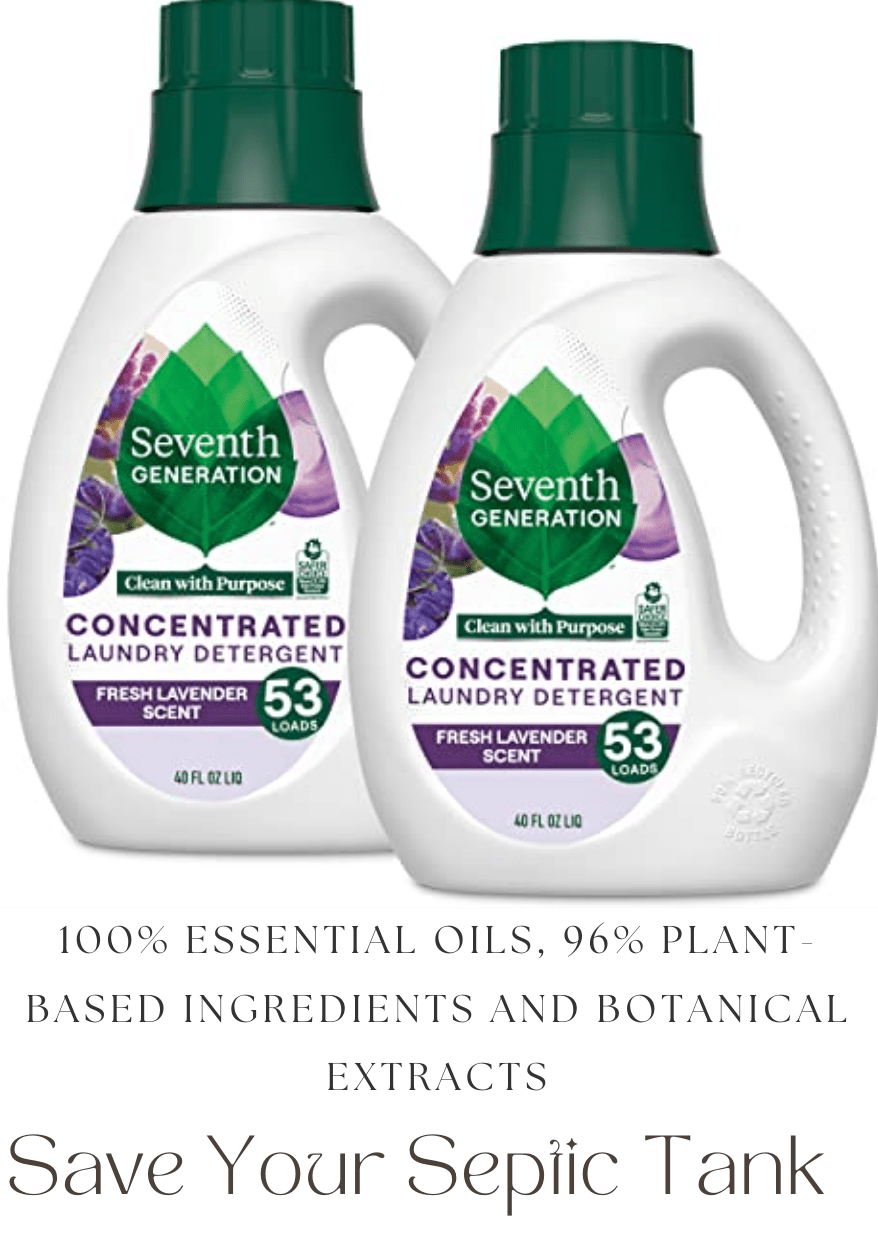
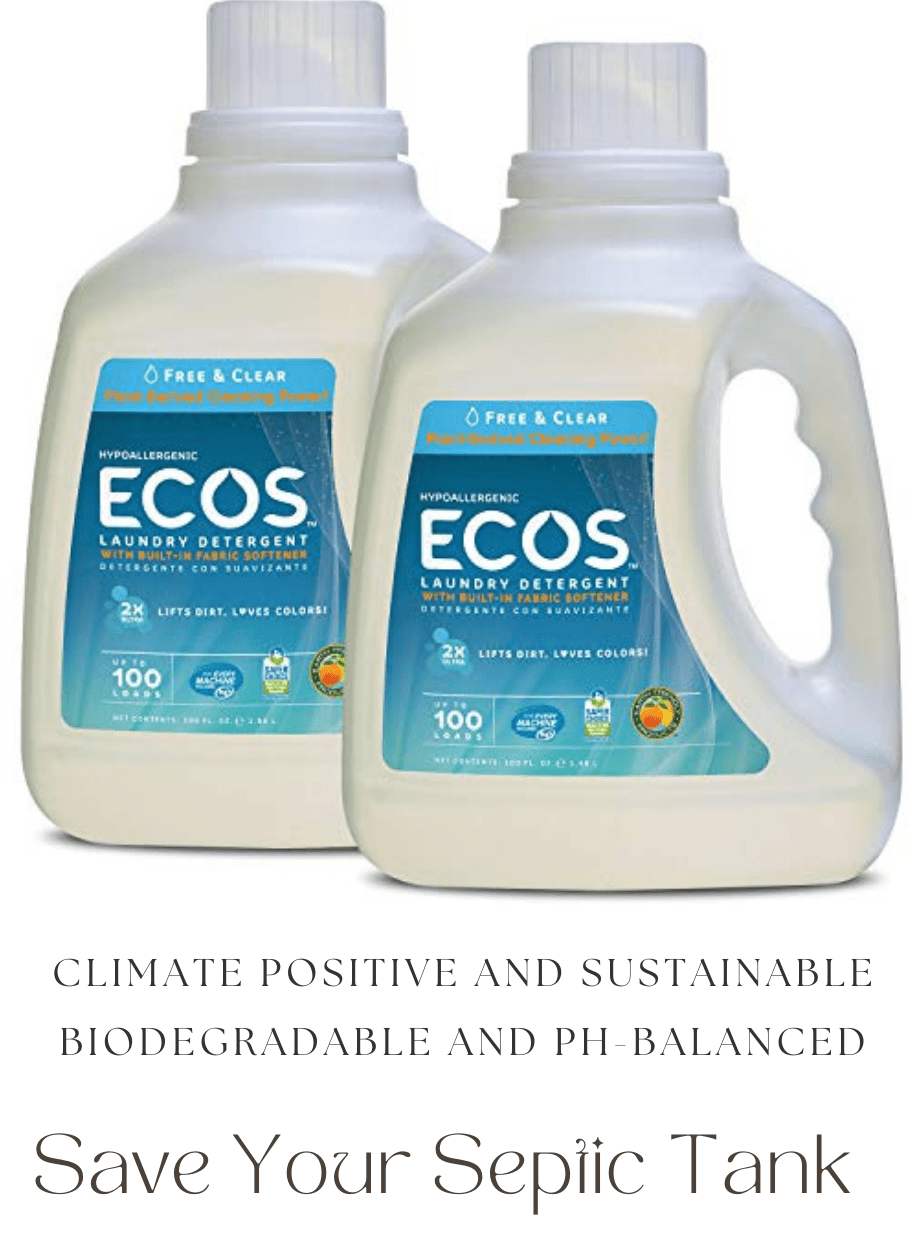
To make sure that the bacteria keep breaking down the waste effectively, it’s important to avoid using harmful chemicals such as bleach, antibacterial soaps, and excessive amounts of household cleaners. The ingredients in these products that kill germs can also harm the helpful bacteria in the septic tank, like phosphates commonly found in soaps used for water softening and stain removal. However, phosphates may result in increased algae growth and harmful bacteria that could block and disrupt the septic tank system. Chlorine bleach can be harsh on septic systems since it kills off beneficial bacteria necessary for waste breakdown. If needed, consider using a non-chlorine bleach alternative instead. Choose alternate soaps and laundry detergents with enzymes like protease, amylase, and lipase to help break down organic matter in your septic system. Finally, it’s important to choose a laundry detergent that is low-sudsing. High-sudsing detergents can create a lot of foam in your septic system, which can lead to clogs and other problems.
 Mother Earth